


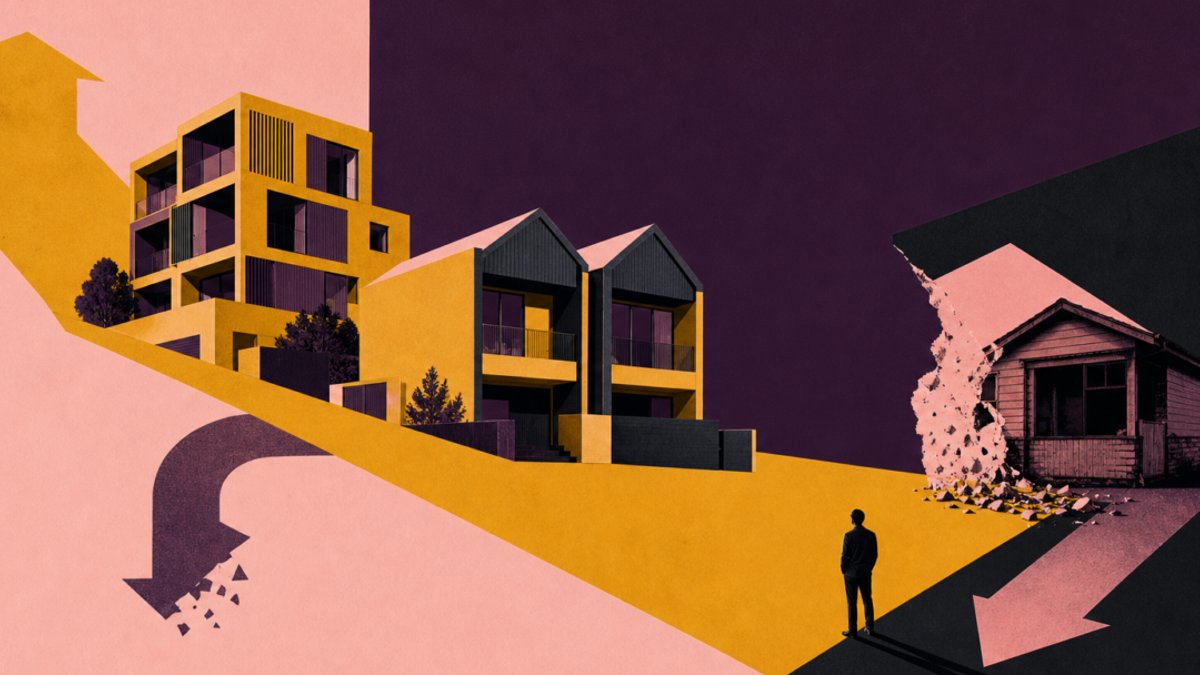
Australian homebuilding priorities have shifted from renovations and one-for-one rebuilds toward new construction, as planning reforms now permit larger blocks to support multiple dwellings. Investment in new housing projects climbed 20% over four years, while spending on knockdown rebuilds, where an existing home is replaced one-for-one, declined 32%, according to KPMG Australia’s analysis.
This change stems from updated planning policies that have expanded homeowners’ options. Previously, restrictive zoning laws often confined choices to either renovating or knocking down and rebuilding. The new rules now allow duplexes and other multi-unit developments, making denser housing more practical on suburban lots.
Renovation spending remains strong despite the trend, making up 37% of all housing spending and rising almost 5% to $56.2 billion in 2025-26, close to its 2021-22 pandemic peak. New South Wales leads with $19.6 billion in renovation outlays, followed by Queensland ($13.7 billion), Victoria ($13 billion), and Western Australia ($5 billion).
KPMG’s urban economist, Terry Rawnsley, attributes the renovation surge to lasting pandemic-era behaviors and temporary financial conditions. “COVID fundamentally changed the way Australians used their homes and sparked a wave of renovation activity that still remains well above the 10-year average despite soaring construction costs and governments encouragement of more new housing to be built,” he said. “In 2025, comparatively lower interest rates increased household budgets, and rising house prices may have encouraged people to invest in their existing homes boosting the pipeline of reno spending before interest rates rose again in early 2026.”
State-level data reveals significant variations. In New South Wales, new dwelling investment overtook renovation spending for the first time since 2012–13. Renovation activity remains concentrated in areas like the Northern Beaches, Sutherland Shire, and inner-city heritage districts. Victoria recorded $24.4 billion in new construction, the highest since before the pandemic, alongside $13 billion in renovations and $4.2 billion in one-for-one replacements. Melbourne’s larger lot sizes make knockdown rebuilds more practical than in Sydney, where smaller blocks drive up costs.
Queensland’s new build spending totaled $17.9 billion in 2025–26, up from $14.1 billion in 2021–22, while renovation spending eased slightly to $13 billion. The City of Brisbane accounted for almost $1.5 billion of that renovation activity, while Noosa recorded the highest renovation share of any leading local government area, at 32% of residential building activity. Western Australia remains the most new-build-focused state, with $8.2 billion spent on new dwellings versus $5 billion on renovations and $556 million on one-for-one replacements. Perth’s abundant land supply supports new development in sought-after neighborhoods.


