


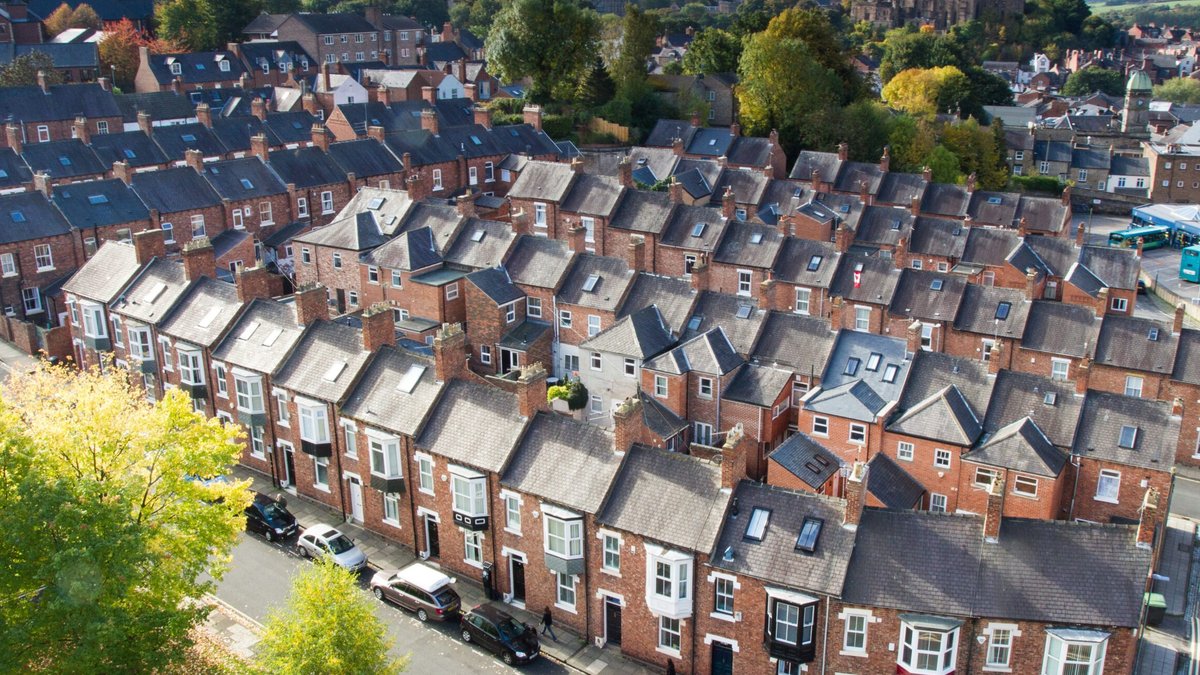
UK house prices fell 0.6% in October, according to the latest Lloyds House Price Index, bringing the national average to £296,285. The decline marks the sharpest annual drop in three years.
Market slowdown deepens
On a year-over-year basis, prices were 1.2% lower, the biggest fall since October 2023. Over the last quarter, they slipped another 0.5%, indicating a broader slowdown.
Andrew Assam, mortgages director at Lloyds, said: “UK house prices fell by -0.6% in October, a larger drop than in recent months, taking the average property price down to £296,285.
“Housing demand is currently being tested by a challenging economic backdrop. Renewed inflationary pressures, driven in part by the conflict in the Middle East, are keeping borrowing costs high and adding to the squeeze on household finances.”
Context for October’s price decline
House prices have moved only slightly over the past two years as the market has gradually adapted to higher interest rates. A recent increase in energy and other household costs has added pressure on buyers, making modest price adjustments unsurprising.
Buyer confidence wanes
Rightmove’s latest trading update showed a 10% fall in buyer demand and a 9% decline in sales agreed, while the portal recorded record levels of available housing stock, adding pressure on asking prices.
The average five-year fixed mortgage rate rose from 5% at the end of June to 5.5% by 31 October, and the Bank of England lifted its base rate from 3.75% to 4%.
“With a year that has so far presented significant challenges for consumer affordability, it sadly comes as little surprise that wider concerns within the global economy are now beginning to impact house prices,” said Nathan Emerson, chief executive of Propertymark.
Emerson welcomed the government’s plan to broaden the Your First Home scheme but warned that “renewed inflationary concerns and yesterday’s increase in the base rate will continue to weigh on consumer confidence.”
Regional data reveal stark contrasts. London posted the steepest annual fall at 3.1%, while the South East and South West each slipped 2.4%. In contrast, Northern Ireland saw a 4.4% rise and Scotland a 2.8% gain. England’s North West and North East recorded modest growth of 2.2% and 2% respectively.
“With average property prices falling in October, the challenging economic backdrop is making itself felt and those buyers and sellers who are prepared to make their move are demonstrating caution,” said Jason Tebb, president of OnTheMarket. “There are significant regional differences behind the headline figures, with strong price growth in Northern Ireland and Scotland, while prices are under most pressure in southern England and Greater London.”
Amy Reynolds, head of sales at Richmond estate agency Antony Roberts, believes buyers were becoming more cautious. “The market has lost some momentum as we head towards the end of the year. Buyers are still out there, but they’re being careful.
“Borrowing costs are the main brake. Yesterday’s base rate rise has been largely priced in already, with fixed rates heading towards 6% for weeks. The real damage is psychological. Another rise tells people that borrowing is getting more expensive, not cheaper, and that makes them hesitate.”
Despite the October dip, Lloyds does not anticipate a prolonged downturn, stating that continued wage growth outpacing house price increases should gradually improve affordability.
Regional differences in housing market performance
Mark Harris, chief executive of mortgage broker SPF Private Clients, warned that the latest Bank of England rate increase could also affect homeowners approaching the end of fixed-rate mortgage deals.


