


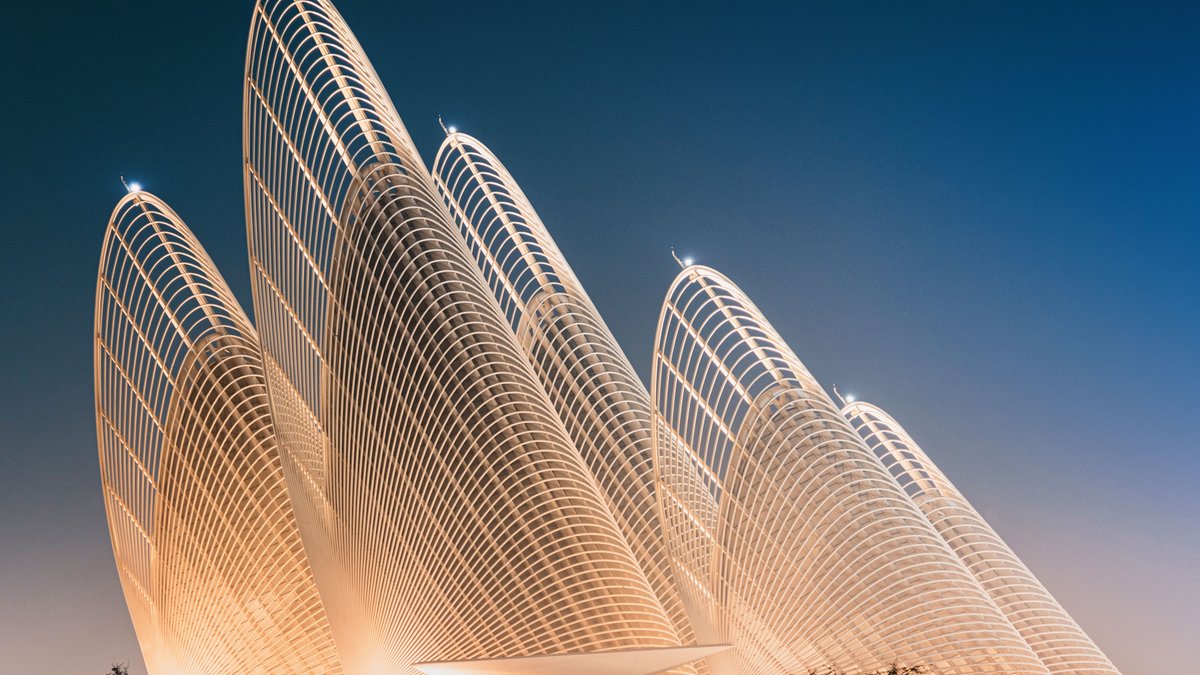
Zayed National Museum opened in Abu Dhabi’s Saadiyat Cultural District, a new landmark that merges iconic architecture with Emirati heritage.
Falcon-Wing Towers and Passive Cooling
The most striking element is a set of five lightweight steel towers that rise like a falcon in flight. Each tower reaches 123 meters, creating a silhouette visible across the island and echoing the bird’s symbolic role in UAE identity.
Beyond symbolism, the Falcon-Wing Towers function as solar thermal chimneys. Warm air is drawn upward, pulling cooler air through the galleries below and reducing reliance on mechanical air-conditioning. This stack effect aligns with the region’s emphasis on energy efficiency.
Glazing technology further supports climate control. Triple-laminated panels and electrochromic glass automatically adjust transparency, moderating daylight while preserving a comfortable interior temperature in the desert heat.
Ground-Level Form and Interior Experience
At street level, the structure appears as a sculpted mound, its faceted skin reflecting the rugged topography of the Arabian Peninsula. The form acts as a thermal barrier, insulating interior spaces from direct solar gain.
Inside, visitors encounter a central atrium called Al Liwan. The expansive, light-filled hall serves as both a gathering place and a venue for performances, recalling the traditional Arabic courtyard that historically hosted community events.
Read Also: Dubai Approves $545M Urban Plan to Raise Property Values
Six permanent galleries branch from the atrium, each curated as a multisensory environment. Exhibits trace human settlement, maritime trade routes, and contemporary achievements in science, art, and sustainability.
A highlight is the reconstruction of the Bronze Age Magan Boat, displayed alongside ancient pearls, manuscripts such as the Blue Qur’an, and artifacts that illustrate the Gulf’s historic role as a trading hub.
The outdoor area includes Al Masar Garden, an open-air gallery that presents a timeline of Sheikh Zayed bin Sultan Al Nahyan’s life across desert, oasis, and urban settings.
Environmental Systems and Material Choices
Lightweight steel framing forms the core of the soaring towers, allowing the structure to rise with reduced material consumption while maintaining structural integrity. The choice of high-strength steel limits the overall carbon footprint associated with construction, aligning the building’s physical presence with its ecological aspirations.
Beyond exhibition halls, the museum offers flexible spaces for live performances, dialogue sessions, and hands-on workshops.


