


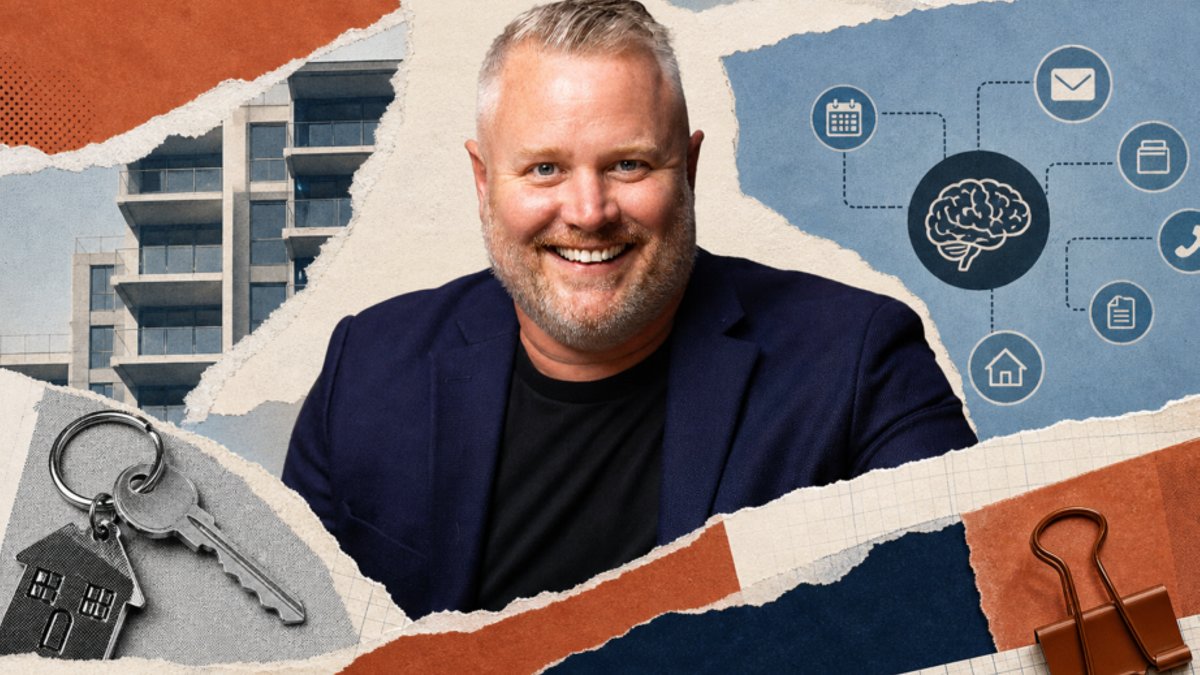
In the real estate industry, a major complaint is that different software systems do not communicate with each other. To address this issue, property professionals are being encouraged to use a brain-like approach, treating their chosen software as a tool that sits above all other systems, reads across them, and helps make sense of information that individual systems cannot see on their own.
According to the report, the average property professional is using less than 1% of what their software can already do, and this gap has nothing to do with the technology itself. Instead, it’s about how the software is being utilized, with many professionals using it only for basic tasks like writing listing descriptions, which is equivalent to using a brain to hold a pen.
Connecting Software Systems
In the last twelve months, there has been a significant development in the ability of software systems to connect with each other. From sales prospecting to property management, opportunities are opening up across almost every part of an agency. Admin data entry, forms, and contract completion are among the harder areas to connect, largely because they sit inside closed compliance-grade systems that are not easily accessible to outside technology.
The introduction of Model Context Protocol (MCP), an open standard that lets an AI connect to software, data, and tools without a custom bridge, has significantly improved the situation. MCP was released by Anthropic in late 2024 and has since been picked up across the industry, allowing software providers to publish what their systems can do and what they hold, and AI systems that support the standard can access the functions and information the provider makes available.
This development has shifted integration from a negotiation between two companies to a standard that providers either support or don’t.
Implications for the Industry
The ability of AI systems to connect with software systems is changing the way property professionals work. With connected AI, professionals can supply the “brain” that sits above all the software, reading across it and helping make sense of information that individual systems cannot see on their own. This can help automate tasks such as lead detection and nurture, listing presentation prep, and property management arrears, allowing professionals to focus on higher-value tasks.
A connector is the piece that plugs a system into the model, allowing the assistant to stop being a chatbot and start being an operator. It can read across systems, identify what needs doing, and take action where authorized. This can result in a sales team whose activity is logged in the CRM without anyone typing it in, and lead detection and nurture inside the database, rather than relying on automated drip campaigns.
However, there are also potential risks and challenges associated with this development, including dependence on a single model, data governance, and internal comprehension. The technology is moving faster than the average office’s ability to understand it, and 2027 is expected to be the year that proptech providers sink or swim on this. The ones without open, connected architecture will not be outcompeted on features, but will simply be unreachable, and the market will route around them.
The use of connected AI is also levelling the playing field in a way that has not been seen before, allowing small, independent agencies to access the same capabilities as large franchises. This is because the operational advantage that large franchises have built over the last two decades is being compressed into something that can be accessed for a monthly subscription. As a result, the gap that used to be bought with scale is now being bought with comprehension, and small agencies are able to compete on a more equal footing.
According to the report, this shift is also reshaping offshore staffing, as a trained, connected model can take on some of the repetitive work traditionally handled by offshore administration teams. This potentially changes the economics of those arrangements, and is a real commercial shift that deserves to be acknowledged. The report notes that this is not just a theoretical concept, but is already being implemented in Australian real estate businesses.
The ability to move between models needs to be designed in from the start, to avoid dependence on a single provider. Data governance is also a critical issue, as connectors give a model access to a business and the ability to act within it. The report states that “who can see what? What can the model change? What requires human approval?” are all operational questions that need to be addressed.


