


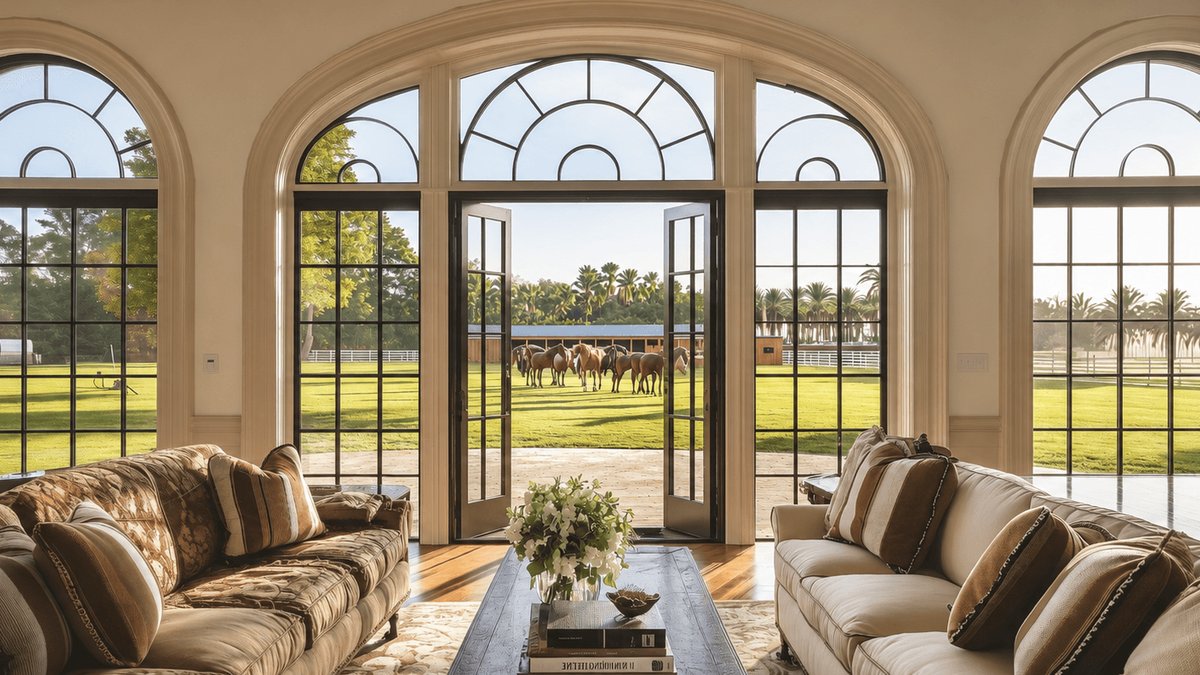
As the 2026 equestrian season begins, the United Arab Emirates is seeing a shift toward equestrian living in its luxury property market.
High-net-worth buyers now prioritize space, privacy, nature, wellness and authentic experiences alongside premium finishes and amenities.
Integrating the Equine Element Early
Design firms such as MOMA International stress that the equine component must shape the master plan from the outset, not be tacked on later.
At the Dubai Polo Club, the team worked on a 160-acre site that includes villas, a hotel, stables and the polo club, with stabling for over 250 horses, requiring a holistic approach.
The challenge extended beyond individual buildings; residential, hospitality and equestrian functions had to coexist while meeting distinct operational needs.
A confidential polo-centric residential project in Dubai also demanded master-planning that weaves equine culture into the community’s identity.
More recently, a private-island development in Abu Dhabi applied the same principles, showing how equine planning can adapt to varied scales and settings.
Design Implications of an Equine-Focused Community
Introducing the animal as a primary user adds new movement patterns: riders, residents, service crews and the animal itself must travel safely without crossing paths.
Separating these routes creates a genuine sense of place that distinguishes luxury real estate.
Animal welfare becomes a design parameter because the animal cannot signal discomfort; heat, ventilation, shade, hydration and surface temperature must be managed.
Outdoor designers therefore create shading structures, micro-climate buffers and dust-control measures that also enhance visual appeal.
Luxury development is moving from purely material differentiation to experience-driven value.
In an equine community, residents might wake to a view of the animals, ride along curated trails, or watch polo matches within their own neighborhood.
The goal is not to create an enclave solely for riders. The equine culture should enrich the broader lifestyle, attracting a wider audience.
Operational planning begins at the design stage because facilities such as arenas, tracks and paddocks require year-round care in a demanding climate.
When architecture, outdoor design, animal welfare, operations and resident experience are treated as a single system, the development gains lasting appeal.
The emerging model aims for destinations whose architecture, outdoor design and overall experience could not have been imagined without the equine element, turning the animal from an amenity into a core identity.
Redefining Spatial Planning
Developers now treat sightlines and arrival routes as integral to the equestrian narrative. Views of paddocks and arenas become focal points from entry corridors.
Long-term performance hinges on infrastructure that withstands the region’s extreme climate. Materials selected for barns and fences resist high temperatures and corrosive sand.


