


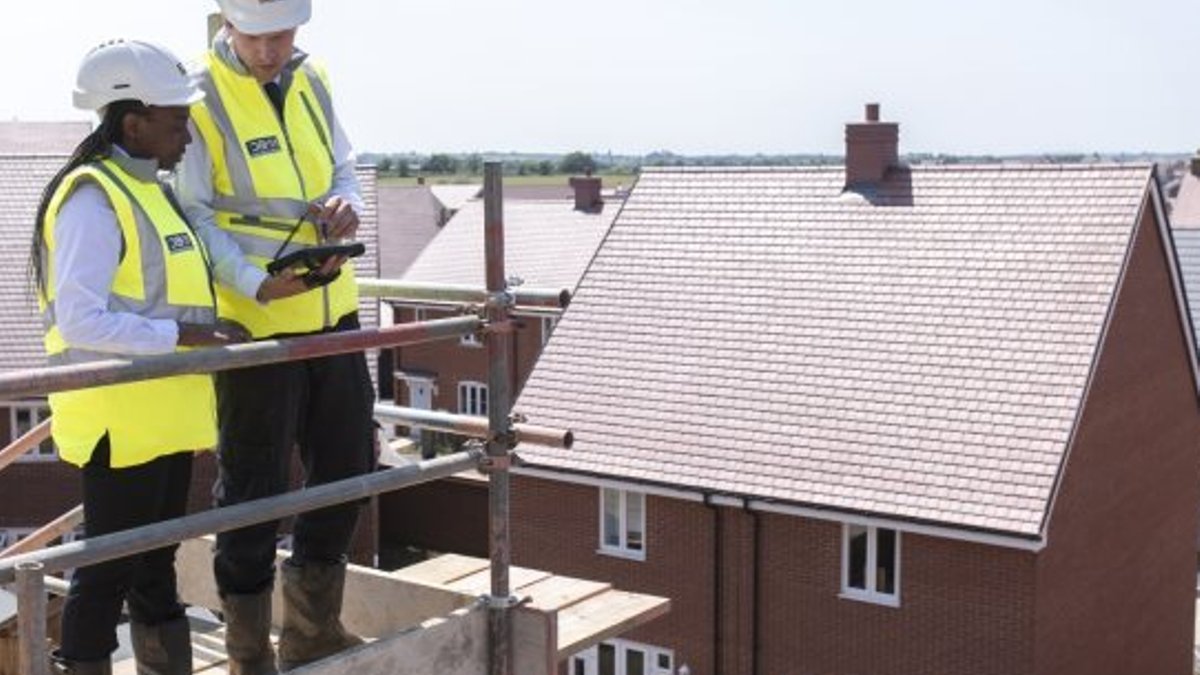
Government taxes, planning obligations, and building regulations are driving up the price of new homes in the UK, with the minimum viable selling price of a new-build flat in inner London reaching £775,000, according to a report from the Centre for Policy Studies (CPS).
The report claims that government-imposed costs account for 57% of the minimum viable selling price of a typical new-build flat in inner London. In the Home Counties, the equivalent figure is 42%.
The CPS modeled a brownfield development of 100 two-bedroom flats in inner London, each measuring 700 sq ft, and found that each private flat would need to sell for approximately £775,000 to make the development financially viable.
Without the taxes, obligations, and regulatory requirements, the minimum viable price would be £333,000, a difference of £442,000 per flat.
Development Costs
The model includes affordable housing obligations, planning delays, and taxes such as stamp duty, corporation tax, and the Residential Property Developer Tax. It also accounts for the Community Infrastructure Levy, Biodiversity Net Gain requirements, and additional building specifications, including balconies, dual-aspect layouts, and second staircases.
The CPS argues that these additional costs can make developments commercially unviable, particularly where local property values cannot support the required selling prices.
Impact on Housebuilding
Report co-author Edward Donovan said the government needed to improve financial incentives for private developers.
Read Also: Rightmove sees profit rise despite housing slowdown
Donovan added that the government must make homes more attractive to build, as 57% of the price of a new London home is set by government policy.
Ben Hopkinson, CPS head of housing and infrastructure, said planning reform would not be enough on its own.
Hopkinson argued that the government must also address the regulation and taxation making homes uneconomical to build.
Call for Reform
Shadow housing secretary Katie Lam backed the report’s findings and called for changes to property taxation and environmental regulations.
Lam argued that ministers should scrap stamp duty and reduce net zero-related building requirements to improve development viability.
The CPS report calls for the government to examine the cumulative impact of its policies on housebuilding costs rather than relying primarily on planning reform. Its conclusions rest on two modelled developments, rather than a full assessment of all new-build properties. The figures therefore illustrate the researchers’ assumptions about development viability, not the amount by which existing homes would fall in value if regulations changed.


