


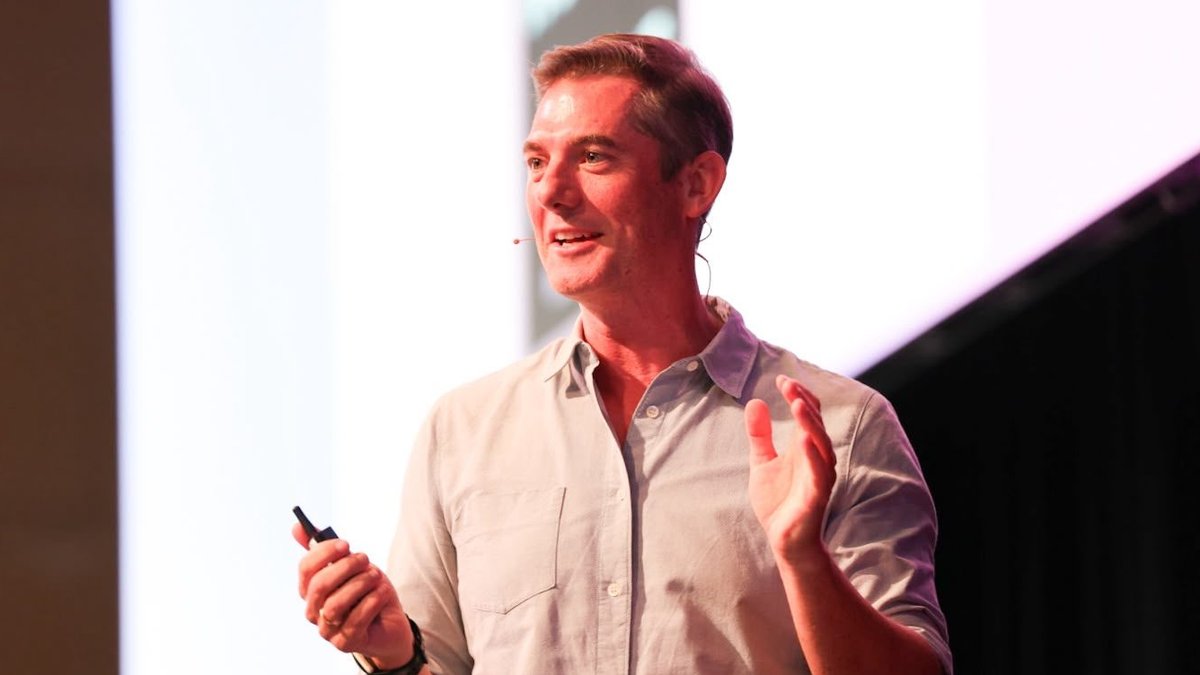
Tim Duggan, a conflict-resolution specialist, has spent years analyzing how individuals manage disagreements—and his five-step method for handling difficult conversations rests on one core principle: what works with a cooperative colleague often fails with someone skeptical or confrontational. During his presentation at the PM/ONE 2026 conference, he introduced a diagnostic framework to assess relational trends before escalation, mapping each interaction along two dimensions: trust levels and alignment of core values.
The framework identifies four distinct relational zones. In the summit, where trust is high and values align, straightforward problem-solving is effective. The minefield, however, presents the highest risk: low trust combined with clashing values means directness can exacerbate tension. Duggan warned that in this terrain, the objective must shift from persuasion to de-escalation. The arena, characterized by high trust but divergent values, becomes a space for structured debate, while the swamp, low trust with shared values, demands cautious questioning and incremental trust-building through small commitments.
Preparation forms the foundation of Duggan’s approach. He emphasized that many conflicts are foreseeable, whether delivering unfavorable news or engaging with someone predisposed to disagreement. Attendees were urged to evaluate two critical questions before entering a conversation: How much trust currently exists? and Do we share fundamental values? These answers dictate the optimal strategy. In the summit, direct communication remains the most efficient path. In the arena, structured discussion can yield productive outcomes. The swamp requires deliberate questioning and acknowledgment to rebuild confidence, while the minefield demands a focus on reducing hostility rather than achieving resolution.
Mastering the art of generous listening
Duggan’s second step, listening generously, hinges on two proven techniques: mirroring and looping. Mirroring involves repeating the speaker’s last few words to encourage continued dialogue, while looping requires paraphrasing their statements to confirm mutual understanding. “Did I get that right?” he said, noting that if the answer is no, the listener should keep listening and checking. He also stressed the importance of silence, eliminating distractions like phones and allowing uninterrupted space for the other person to express themselves.
Read Also: AI assistants replace chatbots as hands-off work helpers
Most disputes, Duggan observed, stem not from the surface issue but from deeper concerns. His third step addresses this by shifting focus through how questions: “How do we get to the bottom of this?” Duggan said this invites the other person to help work toward a solution, shifting the conversation toward how something could happen, giving both people a practical problem to consider. He also referenced workplace expert Amy Gallo, who recommends a reverse risk assessment for those avoiding conflict: considering what could happen if they do not speak up.
Steel manning: Strengthening arguments to build trust
The fourth step, alignment, requires engaging with the other party’s strongest arguments, not their weakest, and presenting them fairly. Duggan termed this steel manning: to influence someone, one must first be open to being influenced. The emphasis, he argued, should be on compassion over confrontation. Even in seemingly irreconcilable positions, he noted, there is typically an underlying concern both parties share. The challenge lies in identifying it.
Not all conflicts resolve neatly. Duggan’s final step, resetting your story, acknowledges that some disagreements may persist. When this occurs, individuals must choose between three paths: fully resolving the issue, revisiting the process to gain deeper understanding, or emotionally or physically releasing the tension. His overarching advice centers on deliberate skill-building: anticipating difficult conversations, listening beyond initial responses, and asking questions that propel both parties forward.


